

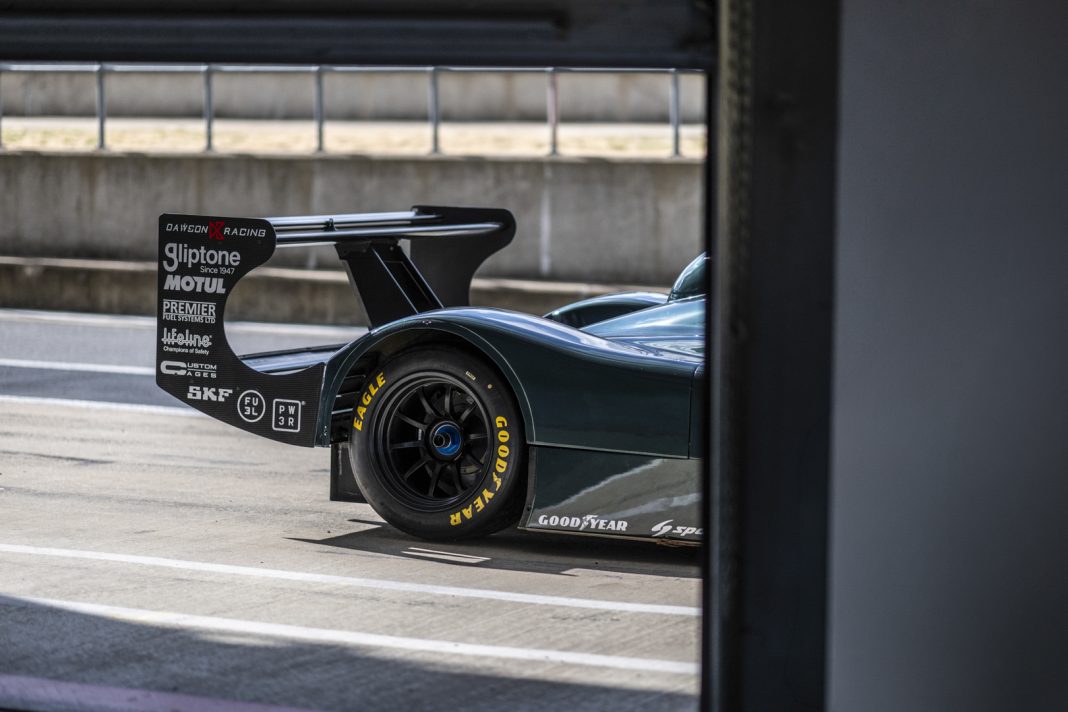
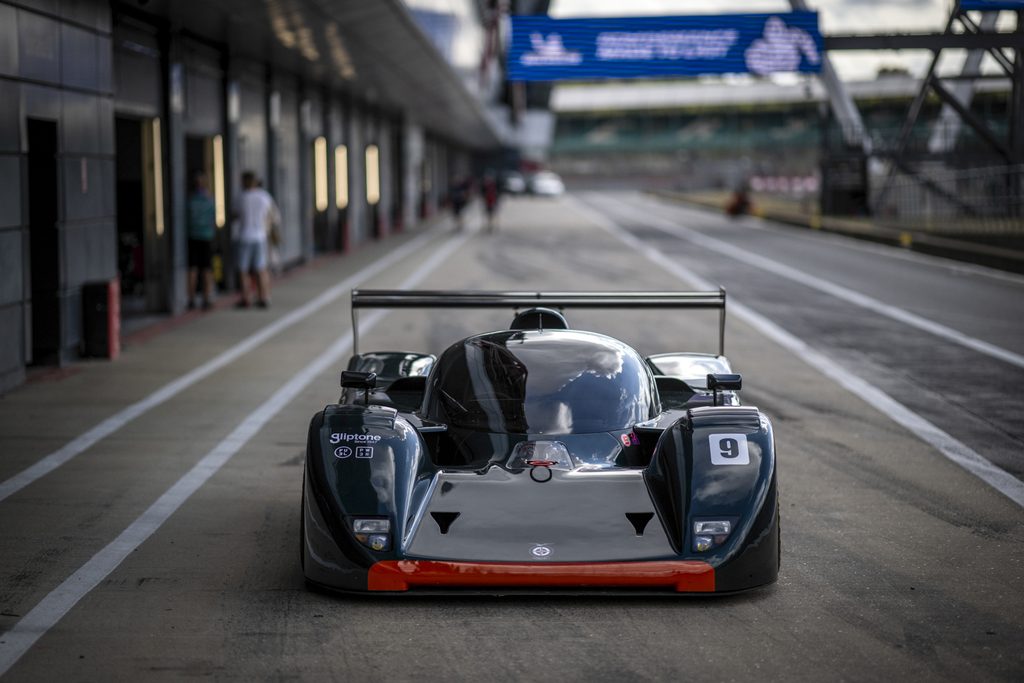
BRM has restored its one-off P351 Group C car, complete with its original 3.5-litre naturally aspirated V12.
More importantly, it plans to race it.
The P351 was built for the 1992 World Sportscar Championship and the 24 Hours of Le Mans. Only one was completed. It used a carbon-composite monocoque, BRM’s own V12 and, in qualifying at Le Mans, reached 216mph on the Mulsanne Straight.
That put it in the same territory as the factory Peugeot and Toyota entries.
Thirty-four years later, it is back at Silverstone.
Putting a P351 back into a P351
This was not a straightforward restoration.
After its original Group C career, the car was heavily modified during the 1990s and became the open-top BRM P301. The roof was removed and the V12 was replaced by a Nissan twin-turbo V6.
BRM acquired the car in late 2024 and handed the restoration to Ian Dawson of Dawson Racing, who had previously worked with the chassis during its time at Pacific Racing.
Returning it to 1992 specification meant rebuilding the original V12 and gearbox, then recreating the missing cockpit roof using surviving paperwork and period photographs.
The result is the P351 as it was intended to be.
A carbon Group C prototype with a 3.5-litre naturally aspirated V12 because, for a brief period in motorsport history, that was a perfectly sensible thing to build.
A car from the end of Group C
The P351 arrived at an awkward moment.
Group C had spent the previous decade producing some of endurance racing’s fastest and most technically interesting cars, but by 1992 the rules had changed significantly. The top class had moved towards 3.5-litre naturally aspirated engines, bringing the regulations closer to contemporary Formula One.
The engineering was still ambitious. The championship itself was running out of road.
BRM’s entry came right at the end of that era, which makes the P351 an unusual car even by Group C standards.
It was not a long-running factory programme or a chassis built in large numbers. It was a single prototype carrying the BRM name back into international sportscar racing and Le Mans.
It also happened to be very fast.
BRM at both ends
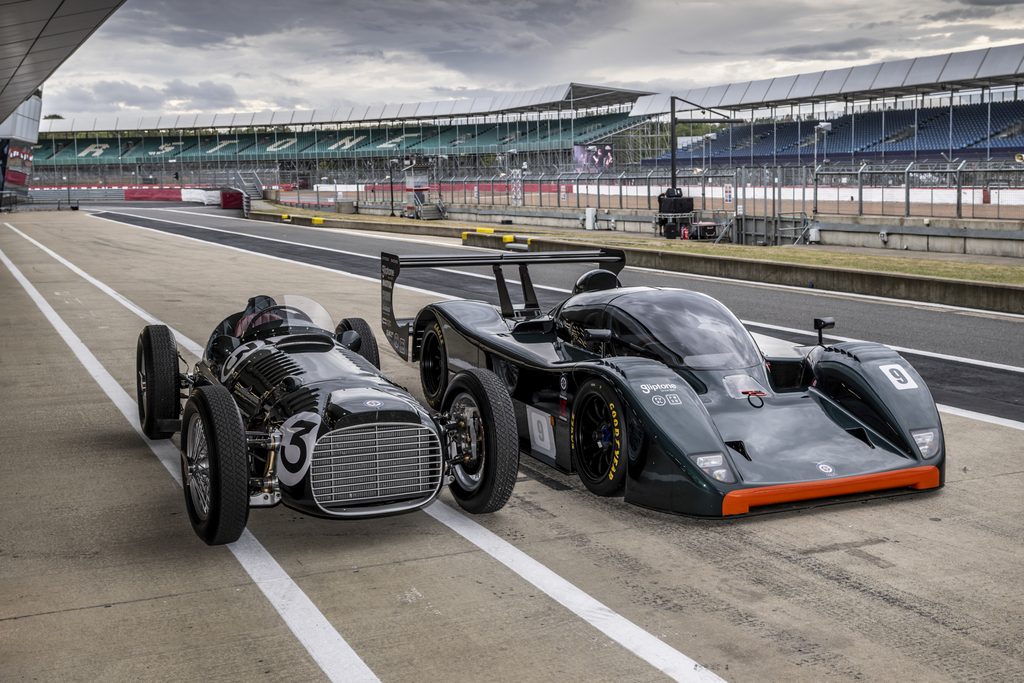
For the unveiling, BRM put the P351 on the Silverstone grid alongside P15 V16 Chassis IV.
The P15 is where the BRM story starts.
Built after the team was founded in 1949, it used a supercharged 1.5-litre V16 and formed part of an ambitious attempt to create a genuinely British Formula One team capable of competing internationally.
BRM would go on to win the 1962 Formula One Drivers’ and Constructors’ World Championships with Graham Hill, as well as 17 World Championship Grands Prix.
Its history extended well beyond Formula One too, through sports cars, endurance racing, Can-Am, rallying and the Rover-BRM gas turbine programme at Le Mans.
The P351 sits at the other end of that history.
More than four decades separate the two cars, but both were built around the same basic idea: make something ambitious, take it racing and find out whether it works.
Seeing them together also makes it harder to reduce BRM to one era or one type of racing.
Not a museum piece
The restored P351 now runs on sustainable fuel and BRM is preparing it for competitive use.
That is the part I like most.
There is no shortage of historic racing cars that have been restored beautifully and then spend the rest of their lives parked indoors.
The P351 was built to race, and BRM appears serious about using it that way again.
That also feels appropriate for this particular car.
Its story has already involved Le Mans, 216mph qualifying runs, major reconstruction, an open-top conversion, an engine transplant and now a return to its original form.
It would be a strange place to stop.
BRM says the first test day will take place later this year, with details of its return to competition still to come.
After 34 years, the P351 may finally get another proper run at being a racing car.